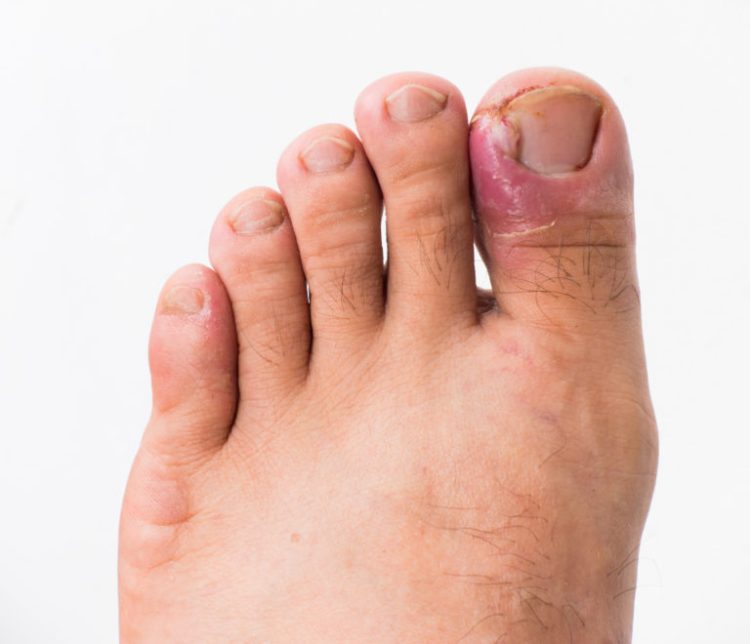
What is an ingrown toenail?
An ingrown toenail develops when the sides of the nail grow into the surrounding skin. This causes the skin to become red, swollen and tender, and in severe cases it can cause pus and bleeding. An ingrown toenail may become infected without treatment and antibiotics may be required. Ingrown toenails most commonly affect the big toenail, but can affect the other toes too.
Causes of an ingrown toenail
Ingrown toenails may develop for many reasons:
- Heredity – in many people, the tendency for ingrown nails in inherited
- Trauma – sometimes an ingrown toenail is the result of a trauma to the nail, such as stubbing your toe, having an object fall on your toe or taking part in activities that involve repeated pressure on the toes, such as kicking or running.
- Improper trimming – the most common cause of ingrown toenails is cutting your nails too short. This encourages the skin next to the nail to grow over the nail
- Incorrect sized footwear – ingrown toenails can result from wearing socks and shoes that are tight or short pushing your toe flesh onto the nail so that it pierces the skin
- Genetic factors – there are many genetic factors that can make you prone to ingrown toenails, including your posture (the way you stand), your gait (the way you walk) and any foot deformity such as a bunion, hammer toes or excessive pronation of the feet (when your foot rolls inward excessively). Your nails may also have a natural tendency to splay or curl out instead of growing straight, encouraging your nail to grow outwards or inwards into the flesh
How to prevent an ingrown toenail
These are some suggestions on how to prevent an ingrown toenail
- Cut your nails straight across the nail, don’t curve your nails to the shape of the front of your toe
- Do not cut them too short. trim toenails so they are even with the tips of your toes. If you trim them too short, the pressure from your shoes on your toes may force the nail to grow into the tissue
- Wear shoes that fit properly. shoes that put too much pressure on your toes or pinch them, may cause a nail to grow into surrounding tissue. If you have nerve damage to the feet, you may not be able to tell if your shoes fit too tightly
- Wear protective footwear. if your activities put you at risk of is, wear protective footwear. such as steel-toed shoes
- Check your feet. if you have diabetes, check your feet daily for sign of ingrown toenails or other foot problems.
How we can help…
You should see a podiatrist urgently if you have symptoms of infection, and also have diabetes, poor circulation or a reduced immune system. You should also visit a podiatrist if you experience any persistent pain in your toe from the ingrown nail or have a condition that affects the nerves and/or feeling in your foot.
Nail surgery is recommended if the problem reoccurs. Depending on the severity of symptoms this may involve either a partial nail avulsion (PNA), where the nail edge (or edges) is/are removed, or a total nail avulsion (TNA), where the whole nail is removed.
For more information on our nail surgery options click here
 Essex Nail Surgery and Foot Centre