What are orthotics?
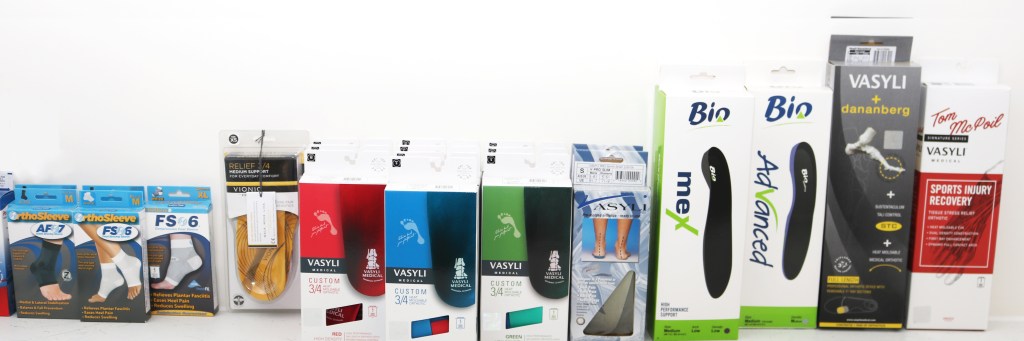
Orthotics (sometimes called insoles, shoe inserts or orthoses) are devices placed inside your shoes to correct the biomechanic balance to your legs and feet and realign your posture.
Unlike over the counter shoe insoles, orthotics are custom made to address individual foot function
How to tell if you need orthotics
Orthotics can be part of a treatment plan to address various symptoms, usually having to do with pain and discomfort of the feet and legs. Some of the goals for orthotic treatment include:
– correcting foot deformities
– helping the foot or ankle function better
– providing support to the ankle
– reducing the risks for further injuries
Orthotics are more than just a heel pad or shoe insert you can buy at most stores. They are highly customised shoe or heel inserts made for your feet. We will only recommend an orthotic if an off-the-shelf device or other treatments, such as exercises at home, haven’t proven effective.
How we diagnose problems
We’ll first ask about your symptoms, questions may include when you first noticed the symptoms, what makes them worse, and what makes them better. We will then conduct a physical exam of your feet; we will look for deformities and areas that are especially painful. We will likely ask you to walk and perform other activities to determine how the feet and ankles are positioned during certain exercises.
What conditions are orthotics used to treat?
Orthotics are used to treat a number of medical conditions. These include:
– Arthritis – rheumatoid arthritis and osteoarthritis can cause discomfort in the feet and poor positioning that orthotics may help to correct.
– Bunions – bunions are painful bumps that can develop at the base of the big toe and cause foot deformities. Orthotics with a wide toe box can help to reduce pressure on the big toe.
– Bursitis – inflammation of fluid-filled sacs in the heels and toes can cause bursitis pain and discomfort. Orthotics with heel and arch support can help to reduce bursitis discomfort.
– Diabetes – sometimes, a person with diabetes can lose sensation in their feet, a condition known as diabetic neuropathy. When this occurs, orthotics can help to reduce excess stress and pressure that can lead to foot ulcers.
– Flat feet – flat feet can cause foot, ankle, and back pain. Orthotics can help to support the feet and promote proper foot positioning.
– Hammer toes – hammer toes often occur as a side effect of bunions on the big toe. They cause second-toe pain and deformities on the ball of the foot. Orthotics can provide additional support to the feet and reduce the likelihood that hammer toes will worsen.
– Heel spurs – heel spurs are conditions where excess bone grows on the back or bottom of the heel. Orthotics can support the foot and reduce inflammation.
– High arches – very high arches can stress muscles in the feet and lead to a number of conditions, such as shin splints, knee pain, and plantar fasciitis.
– Orthotics can help prevent a person’s feet from rolling excessively inward or outward.
– Injuries – people who’ve experienced trauma to their feet and ankles may require extra support during the healing process with orthotics.
– Plantar fasciitis – plantar fasciitis is a common cause of heel pain. We may sometimes recommend orthotics to support the heel and foot.
– Custom orthotics may be prescribed for people who have positional concerns with their feet or legs. This can include those with underdeveloped leg and foot muscles.
Types of orthotics
Orthotics can be customised in a variety of materials. We will write a prescription for an orthotic material based on what condition and symptoms a person has. The orthotic types can range in materials from rigid — usually made from materials such as carbon fibre or plastic — to accommodative, which is very flexible and cushioning.
Some orthotics are full-shoe inserts similar to the insoles present in many athletic shoes. Others are a smaller heel insert that fits into the back cup of the shoe.
 Essex Nail Surgery and Foot Centre