What is paediatrics?
Paediatric podiatry (Podopaediatrics) is a specialist area which focuses on the management of foot and lower limb problems in infants and children.
Proper podopaediatric care is important in the long term because unaddressed structural problems with the feet can worsen overtime, eventually causing severe issues with gait and pain.
Children’s Foot Care
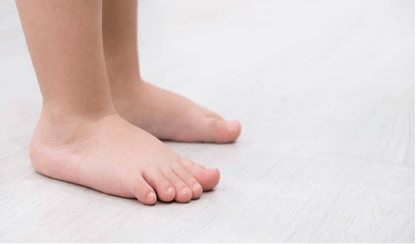
Children are usually born with perfect feet but they are vulnerable to deformity particularly while soft cartilage is forming into bone. If young feet are looked after they should stay fit and healthy throughout life. A child’s foot is not a smaller replica of an adult’s foot and has a number of distinguishing features:
– the foot is widest across the toes
– it is softer and more pliable
– it is rounder and plumper
– it is narrowest at the heel
Children develop at different rates. As a guide, children will start to crawl from about 9 months old and walk from about 11 months old. Between 10-18 months old, many children will be taking their first steps. At this time they will often appear to have bow legs, with feet spread wide apart and a characteristic wobble when they walk. You should always let your child develop walking skills and confidence at their own pace and if you have any concerns ask your health visitor.
What conditions can we help with for children?
An assessment with a podiatrist may be required if a child is complaining of foot, knee or leg pain and discomfort, if there is concern about the way in which the child is walking or the position of the foot. Some of the most common podiatry related conditions found in children include:
– Ingrowing toenails
– Heel pain
– Flat feet
– In-toeing
– Out-toeing
– Toe walking
– Fallen arches
– Bow legs
– Knock knees
– Metatarsus Adductus
Other indications to be aware of are a family history of foot or lower limb problems, hip abnormalities at birth, breech or premature births, taking medication during pregnancy, late walking, lumps and bumps present on the feet or limbs, sleeping and sitting positions.
How to recognise when an abnormality is present:
– Is your child walking differently to other children?
– Does your child refuse to walk?
– Are there any complaints of tiredness, aches or pains during walking or at night?
It is important to have your child assessed by a podiatrist to investigate any abnormalities that may be present. Many problems can be successfully treated when the child is young, and the assessments carried out by our podiatrist are painless.
 Essex Nail Surgery and Foot Centre